
When choosing between real estate prospecting letters vs postcards, start with your campaign goal. Postcards support broad visibility, while letters give you more room to explain a targeted message. Neither format suits every prospect. Choose based on your audience, offer, and desired response.
A real estate prospecting letters vs postcards comparison also depends on how much context recipients need. Both formats deliver a tangible message, but each introduces your services and invites a response differently. This guide compares personalization, visibility, response, and campaign fit to help you choose one format or combine both.
Key Takeaways
- Choose letters when a prospect needs a more personal message or a fuller explanation of your offer.
- Use postcards to build neighborhood visibility and introduce your name to a wider audience.
- Match the format to your audience, campaign goal, and the action you want recipients to take.
- Track responses with campaign-specific methods so you can learn which messages and formats are working.
- Consider using postcards for awareness and targeted letters to continue the conversation with priority prospects.
Letter personalization and trust-building
A letter gives you room to address a property owner’s situation. That can help when contacting someone about an inherited home, a vacant property, or a rental property. A postcard can introduce your services quickly, but offers less space for personal context. Use a letter when the recipient needs a more detailed explanation before responding.
Personalization should make a message relevant, not intrusive. Use the recipient’s name and connect your offer to a clear property-related concern. For instance, a letter to an inherited-property owner could acknowledge that deciding what to do with a family home may take time. Avoid assuming the recipient’s circumstances or applying pressure. A respectful tone makes the message feel like a useful introduction, not a mass-produced pitch.
Brokerage branding helps recipients recognize you, while your own voice makes the message feel direct. Include the brokerage name and logo consistently, then focus the letter on the recipient. For example, explain how you can help evaluate selling options instead of leading with a long company history. Make your signature, contact details, and call to action easy to find. Recognition supports credibility, and a clear next step makes the message practical.
Variable data lets you personalize repeated mailings by changing selected details for each recipient. A campaign might include a name in the greeting, a neighborhood reference in the opening, and your contact information in the closing. Review every field before mailing. A mismatched name or location can undermine the personal tone. Keep each detail relevant to the recipient and campaign.
| Format | Personalization | Branding | Best fit |
|---|---|---|---|
| Letter | Room for a tailored greeting and explanation | Brokerage identity plus agent voice | Targeted, sensitive conversations |
| Postcard | Usually limited to brief details | Prominent visual recognition | Quick introductions and broad awareness |
Whichever format you use, write for the property owner rather than about yourself. Replace a generic introduction with a relevant reason for reaching out, such as recent activity in the recipient’s neighborhood. Then state what you offer and give one clear response option. This recipient-first structure keeps the message focused.
Choose a letter when the owner’s situation calls for context, reassurance, or a specific explanation. Choose a postcard when a concise introduction and recognizable brokerage branding matter most.
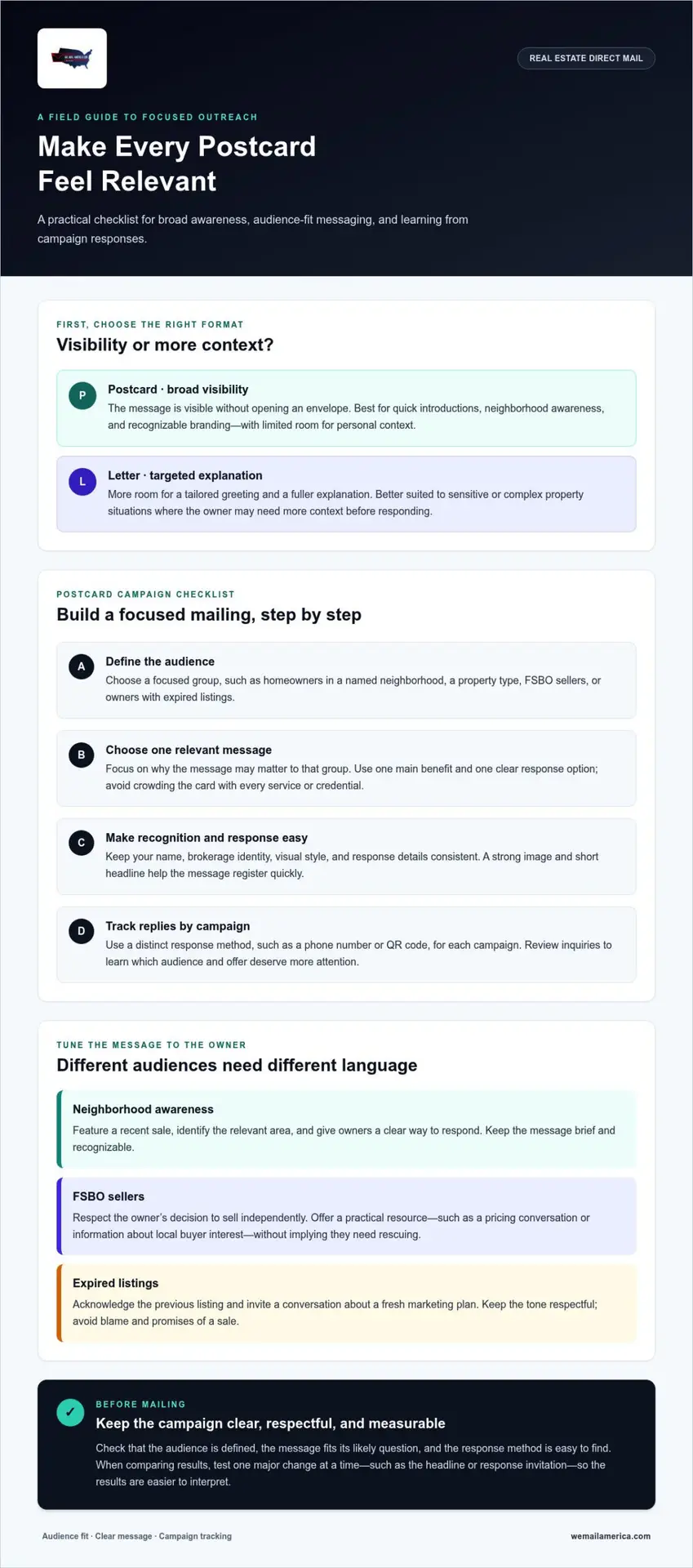
Postcards are useful when you need broad awareness and a brief introduction is enough. They offer less room for personalization than letters, so focus details on why the message may matter to the recipient. A letter can help when contacting an owner about a complex or sensitive property situation, because a tailored explanation can build trust without presuming what the owner wants.
Whichever format you choose, center the message on the recipient’s concern. Explain why you’re reaching out, offer a useful next step, and keep brokerage credentials and sales language from crowding out the owner’s perspective. Choose a format that gives the recipient enough context to understand your offer and decide whether to respond.
Postcard visibility and broad outreach
A postcard displays its main message without asking the property owner to open an envelope. That makes it useful for neighborhood awareness, where repeated recognition matters more than a detailed conversation. For example, feature a recent sale, identify the relevant area, and give owners a clear way to respond. High-quality imagery from professional real estate photography services like curb360.com and a short headline help the message register quickly.
Broad reach works best with a focused audience. Choose a neighborhood, property type, or owner group, then tailor the message to that audience. A postcard for absentee owners might introduce you as a resource and invite a conversation about the property. Avoid cramming in every service or credential. One main benefit and one call to action make the card easier to scan.
Consistency builds recognition. Keep your name, brokerage identity, visual style, and response details consistent across a campaign, and vary the message when the purpose changes. A seasonal update can differ from a postcard introducing a listing while retaining recognizable branding. One mailing can introduce you, but a planned sequence gives recipients more chances to remember your name.
For FSBO outreach, respect the owner’s choice to sell independently. A postcard can offer a practical resource, such as a pricing conversation or information about local buyer interest, without implying that the owner needs rescuing. Use a direct headline, one specific benefit, and a low-pressure invitation. A message that criticizes the owner’s approach can damage trust before a conversation begins.
Expired-listing outreach calls for a different message. The owner has already experienced a listing that did not sell, so avoid generic claims about being the best agent. A postcard can acknowledge the previous listing and invite a conversation about a fresh marketing plan. Keep the tone respectful. Don’t imply the owner failed or promise a sale. The aim is to earn a response, not make an unsupported guarantee.
Before mailing, use these steps to keep broad outreach relevant:
- Define the audience, such as homeowners in a named neighborhood or FSBO sellers.
- Choose one message that fits that group’s likely question.
- Make the agent’s name, brokerage, and response method easy to find.
- Track replies by campaign so future postcards can reflect actual interest.
For example, use a distinct phone number or QR code for a neighborhood postcard, then compare inquiries with those from an expired-listing message. This can help identify which audience and offer deserve more attention. Test one major change at a time, such as the headline or call to action, so results are easier to interpret.
If you’re planning a postcard campaign for FSBO sellers, expired listings, or neighborhood awareness, an advertising inquiry form can help start the campaign conversation.
Direct mail response and open rates
Open rates and response rates measure different steps. The USPS Household Diary Study reports an 87% open rate for direct mail postcards across consumer demographics. A postcard needs no envelope opening, so exposure doesn’t mean the recipient read or acted on its message. Open and response rates can vary across campaigns, and an opened piece does not necessarily mean the recipient read or acted on its message.
Response-rate benchmarks also depend on the audience. The Data & Marketing Association reports a 2-4% average response rate for postcards sent to prospect lists. It reports 5-9% for letters sent to house lists. Those list types differ, so don’t treat the figures as a direct contest between formats. Use them as context, then compare campaigns with similar audiences and offers.
Results depend on targeting, message, timing, and frequency. A postcard with one clear neighborhood offer may prompt an inquiry, while a letter to a carefully selected homeowner can explain a specific opportunity. Track calls, form submissions, QR scans, and replies separately. A unique phone number, QR code, custom landing page, or campaign-specific tracking link can connect responses to a mailing.
To measure return on investment, attribute leads and closed transactions to each campaign, then compare the resulting revenue with campaign costs. When working with We Mail America, track letters and postcards separately, including production and mailing expenses, so the comparison reflects the full campaign. Label responses by format and mailing date, then assess both cost per lead and lead quality, not just reply volume.
For U.S. real estate direct mail, keep advertising claims accurate, identify the agent or brokerage clearly, and follow the requirements that apply where the property is marketed. Requirements can vary by state, so tailor wording and disclosures to the relevant market.
Use a consistent test rather than changing several campaign elements at once:
- Choose comparable audiences and a clear goal for each format.
- Give each mailing a distinct tracking method, such as a dedicated QR code.
- Record responses, qualified leads, and closed business by campaign.
- Compare results after accounting for each campaign’s full costs.
Test both formats when the audience and offer allow a fair comparison. Keep the headline, call to action, target group, and timing as consistent as possible. Change one major element at a time, then use response data to refine the next mailing. A postcard may attract more immediate attention, while a letter may produce fewer but more qualified conversations. Measure the outcome that matches your campaign goal.
Postcards may produce faster responses than letters depending on your target audience. The postcard farming scenario assumes 3%, while the expired-listing letter scenario assumes 7%. Test both formats and track results to optimize spending and improve ROI.
Matching mail format to campaign goals
Start with your campaign goal, then choose a format that supports it. A neighborhood campaign needs recognition across a defined area. A message to a property owner in a sensitive situation may need more explanation and a personal tone. The choice between real estate prospecting letters and postcards depends on your audience, message depth, and follow-up plan.
For neighborhood farming, postcards can build recognition with concise, repeated messages. For seller leads, match the audience with a clear offer, then use a letter when an owner needs more context. Frequency matters alongside targeting. If ongoing follow-up supports your goal, plan multiple mailings to a smaller, selected prospect list.
Consider the audience before choosing. A postcard can introduce you to absentee property owners and announce neighborhood activity with a simple invitation to discuss local interest. A letter may suit an owner facing a difficult decision who needs a more personal explanation of your offer.
Time, budget, market knowledge, and experience also shape the decision. A postcard keeps the message compact and suits broad awareness. A letter gives you room to explain details, but it needs a focused message that respects the recipient’s circumstances. If your prospect list is uncertain, refine the audience before expanding the mailing. Relevance helps avoid reaching mismatched prospects.
A combined campaign can move from introduction to a more detailed conversation. Send a postcard to build familiarity, then use a letter for selected owners who need a direct explanation. Connect both pieces with consistent agent identification and a clear next step. This gives each format a distinct role instead of repeating the same message.
Use this decision guide to match format to goal:
- Build neighborhood awareness: Choose postcards with one local message and a recognizable agent identity.
- Reach a broad owner audience: Use postcards to introduce your role or a relevant real estate offer.
- Explain a targeted offer: Choose a letter when the owner needs context or a personal approach.
- Develop seller leads over time: Plan follow-up mailings for a selected audience, then track responses by format.
- Combine awareness and trust-building: Introduce your name with a postcard, then use letters for priority prospects.
Before mailing, define your audience, desired response, and follow-up plan. A neighborhood campaign might seek conversations with homeowners, while a letter may invite one owner to discuss selling options. Track each campaign separately and adjust the format when your goal changes. Choose the method that fits the message, not simply the one you’ve used before.
Real estate letters for prospecting
Letters and postcards can serve different stages of a prospecting campaign. Choose based on your audience, message, and desired response.
Prospecting Letter and Postcard Basics
A real estate prospecting letter gives you room to explain an offer, while a postcard presents a shorter message on a single piece. Letters suit targeted conversations, such as discussing selling options with a landlord. Postcards make a concise introduction to homeowners in a selected area. USPS requirements cover addressing, postage, and mailpiece preparation; details depend on the format and mailing method. Keep advertising claims accurate and follow applicable requirements for the market.
Advantages and Disadvantages
Letters give you room to explain context, personalize a message, and build credibility with owners facing a complex decision. They require recipients to open an envelope. Postcards show the message immediately and suit broad awareness, but offer less space for a tailored explanation. The trade-off is depth versus quick visibility. For example, use a letter to explain a service to an inherited-property owner and a postcard to introduce yourself across a neighborhood.
Prospecting Mail Content
A prospecting piece should identify you or your brokerage, address the owner’s likely need, and offer one clear next step. A letter can explain how you approach a pricing conversation or marketing plan. A postcard should focus on one benefit and a concise invitation, such as calling to discuss selling options. Keep the focus on the recipient, not a long list of credentials. Avoid guarantees or assumptions about a homeowner’s situation, and make contact details easy to find.
Mailing Frequency
There is no single schedule for every neighborhood. Frequency depends on the audience, campaign goal, message variety, and response patterns. A farming campaign can use multiple mailings to the same area over time, while a letter to a specific seller may call for follow-up based on that conversation. Keep a mailing log with the date, audience, format, message, and responses. If each mailing repeats the same offer, revise the message before sending another piece.
Build a simple plan before launching: define the target area, choose a format, write an audience-specific message, and track replies. Use response patterns to decide whether to repeat, adjust, or change your approach. For example, begin with a neighborhood postcard and reserve letters for owners who need more detail. This gives broad outreach and personal follow-up distinct goals.
Plan your real estate direct mail campaign and choose the format that fits your prospecting goal.
We Mail America: Impact Post Card – 6 X 11
We Mail America’s Impact Post Card – 6 X 11 gives agents a postcard option for real estate prospecting campaigns focused on concise, visible outreach. Choose a postcard format when you want to introduce your name, share one property-related message, or invite a seller to respond.
Other options include the Extra Large Card – 9 X 11, Mailbox Buster Post Card – 12 X 9, and The Giant Post Card – 10 X 14. Their different dimensions let you compare formats against your message and campaign goals. Keep the design focused on the audience, with a clear offer and response method.
If a postcard fits your prospecting plan, contact We Mail America to discuss your mailing needs.
Turn Your Prospecting Plan Into a Campaign
To decide between real estate prospecting letters and postcards, choose an audience, define the response you want, and build a message around that goal. A focused first campaign gives you a clear starting point for learning what resonates with property owners. Track responses, note which conversations become qualified opportunities, and use those insights to shape your next mailing.
Keep the plan practical: define your audience, choose one call to action, and make sure the format supports the message. If your campaign needs a tangible postcard, We Mail America can help turn the idea into a mailing plan. The right approach depends on your audience and objective, so start with the decision you can make now.
Contact We Mail America about your mailing campaign and take the next step with a clear plan.
Frequently Asked Questions
Verdict: Which Format Should You Use?
Choose postcards for broad visibility and letters for a focused, more detailed approach. An agent introducing their services across a farming area might start with postcards. An agent contacting a specific property owner about a sensitive situation might choose a letter. When weighing real estate prospecting letters versus postcards, match the format to the recipient’s needs and your desired response, rather than treating one format as universally better.
Are letters or postcards more effective for real estate prospecting?
Neither format is automatically more effective; the audience and campaign goal shape the result. A postcard can introduce you to owners in a defined area, while a letter can give a selected prospect more context. For a practical comparison, use the same offer and audience criteria, give each format a distinct response method, and evaluate the quality of conversations, not only the number of replies.
What are typical response rates for real estate prospecting letters vs postcards?
Real estate prospecting letters typically receive a 4-9% response rate. The Data & Marketing Association reports a 2-4% average response rate for postcards mailed to prospect lists, and 5-9% for letters mailed to house lists. These figures describe different list types, so they aren’t a direct like-for-like comparison. Treat them as benchmarks, then measure each campaign using its audience, message, and tracked responses.