
More exposure doesn’t always mean more impact. Digital ad fatigue can grow when people see repetitive promotions, receive messages that don’t match their interests, or encounter ads too often. Overcoming digital ad fatigue with mail means refreshing the message, matching content to each channel, and giving audiences a tangible way to engage beyond the screen.
If digital engagement is slipping, simply sending more of the same is unlikely to help. Keep communication relevant by tailoring messages to each channel, varying the creative, and using mail as a physical touchpoint alongside digital campaigns. This article explains what drives ad fatigue, how to recognize it, and how to choose channels that make your marketing more useful and engaging.
Key Takeaways
- Match each message to its channel instead of copying the same creative everywhere.
- Use audience interests and engagement signals to make communications more relevant and timely.
- Watch for weakening responses and repeated creative as signs that your campaign may need a refresh.
- Space out promotions and coordinate digital touches with other channels to reduce overexposure.
- Consider a physical mail piece when you want to add a tangible touchpoint to a digital campaign.
1. Adapting content to each marketing channel
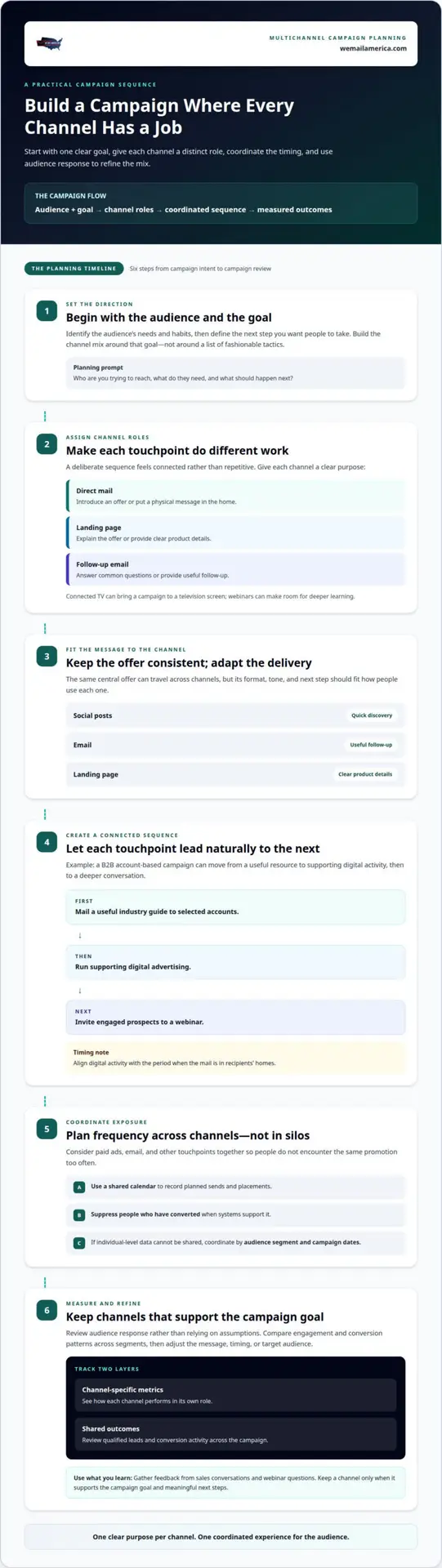
A message that earns attention on Instagram may feel intrusive in an inbox. In 2019, there were 3.484 billion social media users worldwide, up 9% year-on-year, according to Cureus. That scale makes channel choice important, but the creative still needs to fit how people use each platform. Use social posts for quick discovery, email for useful follow-up, and a landing page for clear product details. Keep the central offer consistent while changing the format, tone, and next step for each audience.
Map content to the customer journey before drafting a campaign. A new subscriber may need a welcome email explaining what they signed up for, while a returning customer may value product guidance based on previous purchases. Someone browsing a service page could receive a practical follow-up, while a customer with a service issue needs help rather than another promotion. Use audience insights, feedback, and engagement metrics to shape each message. This keeps advertising relevant to a person’s situation instead of sending the same message to everyone.
Email cadence needs the same care as content. A promotional email once a month can create a recognizable routine without filling every inbox with sales messages. Test send times and review open and click-through rates to see when subscribers respond. A preference center can let people choose email topics, delivery timing, and frequency. For a focused campaign, tailor an offer to a subscriber segment’s interests instead of sending a generic promotion. A limited-time offer can expire in 24 hours, but urgency works best when the message clearly explains its value and deadline.
Customer stories can bring fresh perspective to a campaign. A testimonial, customer photo, or brief account of a product in use gives the audience a specific example to consider. Get permission before using customer-created material, then adapt it to the channel: a concise social post, a detailed email, or a quote on a landing page. Seasonal themes can also make a campaign feel relevant. A home-improvement business, for instance, might share spring maintenance advice, then follow with a seasonal service reminder instead of repeating the same discount.
B2B content should address work challenges, not just promote a product. For example, a software company could send operations leaders a short process checklist, then offer original research or a webinar for those who want deeper insights. Build decision-maker personas from audience challenges and objectives, then match each asset to a stage in the buying journey. For growing teams seeking senior marketing direction to coordinate these efforts, fractional leadership resources like budgetboosters.eu can help align cross-channel strategy. Track responses by segment and use feedback to refine the next message. This makes every channel serve a clear purpose, and gives prospects useful reasons to keep paying attention.
2. Prioritizing alternative channels
When a campaign depends heavily on social feeds and email, add channels that reach people in different contexts. Direct mail puts a physical message in the home; connected TV can bring a campaign to a television screen; webinars create room for deeper learning. Choose channels based on the audience’s habits and the action you want. A local service business might use mail to introduce an offer, then use search advertising to reach people actively looking for that service.
Build the channel mix around one clear goal, not a list of fashionable tactics. Start with the audience, its needs, and the next step you want people to take. Then give each channel a distinct role. Mail can introduce an offer, a landing page can explain it, and a follow-up email can answer common questions. A deliberate sequence makes a multichannel campaign feel connected rather than repetitive.
Coordinate campaign frequency across channels so people don’t encounter the same promotion too often. Consider paid ads, email, and other touchpoints together rather than treating each platform as a separate system. Use a shared calendar to record planned sends and placements, and suppress people who have already converted. If systems can’t share individual-level data, coordinate by audience segment and campaign dates. This helps reduce avoidable overlap without assuming every channel measures exposure in the same way.
Use a campaign map to coordinate timing and measure each channel’s role. For example, a B2B account-based campaign could mail a useful industry guide to selected accounts, run supporting digital advertising, then invite engaged prospects to a webinar. Align digital activity with the period when mail is in recipients’ homes. Gather feedback from sales conversations and webinar questions, then use those insights to adjust content. Track channel-specific metrics alongside shared outcomes, such as qualified leads and conversion activity. This shows whether a channel introduces interest, supports consideration, or prompts action.
Review the channel mix against audience response, not assumptions. Compare engagement and conversion patterns across segments, then adjust when a channel attracts attention but doesn’t lead to meaningful next steps. A retailer might find that social ads generate visits while a mail piece helps customers remember a seasonal offer. Keep both channels only if they support the campaign goal. Otherwise, revise the message, timing, or target audience.
For campaigns that need a coordinated channel plan, discuss your advertising campaign and identify where direct mail can support the broader mix. A deliberate plan gives each channel a distinct purpose and helps limit repeated exposure.
3. Brand fatigue and repeated promotional messages
People notice patterns. When a brand repeats the same offer, image, and call to action everywhere, another impression can feel familiar rather than useful. The Rule of Seven suggests a prospect may need to encounter a message at least seven times before taking action. That isn’t a reason to repeat one creative endlessly. Repetition can build recognition, but unchanged messages can also make audiences tune out.
Research figures point to the risk of overdoing promotions. In a 2016 survey, 46% of respondents said they unfollowed brands for posting too many promotional messages. In that survey, 41% cited irrelevant information, while almost 35% said they unfollowed brands that tweeted too much. The lesson for marketers is practical: frequency and relevance work together. A message that arrives too often, or lacks a clear connection to the audience, gives people a reason to disengage.
Repeated advertising can also weaken purchase intent. AD-ID research reports that 61% of consumers are less likely to buy from brands that repeat the same ads too often. Clutch.co research reports that 93% of consumers skip or block digital advertisements they perceive as repetitive. These findings make creative refreshes more than a design task. Change the message, visual, format, or offer when performance softens, while keeping the brand identity recognizable.
Exposure thresholds are not identical for every campaign. A historical range places ad fatigue around 7 to 10 exposures, but audience size and channel impact can shift the point. Treat that range as a prompt to monitor, not a universal cutoff. Review campaign performance weekly, monthly, or quarterly, depending on its pace. Compare engagement and conversions by audience segment, and notice whether one creative has lost response while another still earns attention.
Use a simple refresh process. First, identify the message or placement linked to falling engagement. Next, change one variable, such as the headline, image, audience segment, or channel. Then compare the results with the earlier version against the same campaign goal. Record each change so you can distinguish creative fatigue from shifts in audience or timing. For example, a retailer could replace a repeated discount ad with a product demonstration and assess whether it prompts more meaningful action.
Brand fatigue can also grow when every interaction asks for a sale. Balance promotions with product guidance, customer stories, or useful information that helps people make informed choices. Give people a fresh reason to notice the brand, rather than simply reminding them that it exists.
Email needs the same balance: using the same email templates, offers, or messaging repeatedly can contribute to email fatigue. A familiar sender may still lose attention if each message feels interchangeable or asks for the same action.
Email fatigue grew exponentially in 2020 as brands relied on email marketing to stay in touch with consumers. To keep messages relevant, vary the content and purpose of emails rather than simply repeating a promotion. Product guidance, customer stories, and timely offers can give subscribers different reasons to engage, while a consistent brand identity keeps communications recognizable. Monitor responses and refresh the approach when messages stop earning attention.
4. Definition and effects of digital ad fatigue
Digital ad fatigue happens when repeated exposure makes an advertisement easier to ignore. Consumers may recognize a familiar visual, scroll past it, or block it without considering the offer. On social platforms, the same creative can follow an audience across feeds, stories, and video placements. That repetition can reduce attention even when the product remains relevant. Fatigue describes a response to the advertising experience, not proof that the offer itself has no value.
Look for patterns across campaign metrics before changing your entire digital marketing strategy. Declining click-through rates can signal waning interest, while rising unsubscribes may point to frustration with email frequency or content. Landing-page time, scroll depth, and conversions add context. For example, steady clicks alongside fewer completed forms may indicate a page or offer problem, not ad fatigue. Compare results by audience segment and platform to see where engagement is weakening.
Separate fatigue from other causes. A poorly matched audience may ignore an ad from the outset, while a confusing call to action can limit response despite strong attention. An outage or seasonal shift can also affect results. Check the campaign timeline, landing page, and audience targeting before blaming a repeated visual. If results decline on only one platform, examine its placement and format before replacing creative across every channel.
Testing helps identify what needs to change. Compare two creative variations with one clear difference, such as the opening image or headline, then judge them against the same campaign goal. Amazon Advertising research reports that 79% of consumers are more likely to engage with interactive, varied ads. Use that finding as a reason to explore formats, not as a promise of results. A product demonstration, customer quote, or interactive prompt can give people a different way to respond.
Track short-term response alongside audience signals. If an ad gets fewer clicks but conversions remain steady, it may still be reaching the right people. If clicks, conversions, and repeat engagement all weaken, refresh the creative or adjust the targeting. Review comments and customer questions for clues about relevance. For example, repeated questions about a service may show that an ad needs clearer information, rather than a new color or image. Identify the cause, make a focused change, and measure the response before expanding it.
Review promotional activity regularly to keep the schedule and brand experience effective. A consistent review can help teams notice when audiences are seeing the same message too often and decide whether to adjust timing, creative, or channel mix. Base those decisions on observed engagement, not novelty for its own sake. Review the results of a refresh before making broader campaign changes.
Channel comparisons can inform that review, but they should not replace campaign-level evidence. 50% of marketers claim email marketing is more effective than social media. Treat that figure as a perspective to consider, not a guarantee that email will outperform social for a particular audience or offer. Compare the response to each channel’s role and objective, then use the results to guide future promotional choices. A thoughtful cadence and measured adjustments can help preserve attention without abandoning messages that still serve the audience.
5. Preventing overexposure
Prevent overexposure by managing who receives each message, when they receive it, and what they see. Base suppression rules on recent engagement, customer lifecycle stage, and other factors that affect receptiveness. For example, pause promotional email to a customer with an unresolved service issue. Reduce sales messages for a new subscriber who is still learning about the brand. These choices protect the relationship and keep communications relevant to the customer’s situation.
Start with a shared campaign calendar. Record planned email sends, paid placements, and other audience touchpoints in one view. Add the segment, message purpose, and timing to each entry. Before launch, compare schedules and remove overlapping promotions aimed at the same group. A recent purchaser could receive helpful setup guidance instead of another acquisition offer. Suppression should reflect meaningful customer activity, not just a campaign’s preferred schedule.
Refresh creative as exposure builds. Many brands should update ad creative every few weeks to every couple of months, adjusting cadence for exposure frequency and audience targeting breadth. A tightly targeted audience may see the same ad repeatedly sooner than a broad audience. Watch impressions alongside clicks and conversions, then replace a tired visual or message when response weakens. For e-commerce brands navigating paid ad rotations and email touchpoints, specialized agencies like Rozee Digital can help maintain fresh creative and fine-tune audience delivery. Refreshing doesn’t require changing the brand identity. A new product image, customer use case, or benefit-led headline can give the campaign a fresh angle.
Use engagement signals to guide pauses and follow-ups. If a subscriber stops opening emails, reduce promotional frequency and test a more useful subject line or message. If a customer clicks a product page, follow up with relevant information rather than repeating the same ad. Align the next step with that person’s behavior. A preference center can also let subscribers choose topics and delivery frequency, giving marketers direct input on their sending plan.
Set a regular review process for each campaign. Compare response by audience segment, channel, and creative version, then document any changes. If email engagement falls while landing-page activity stays steady, adjust email timing before changing every channel. If digital ads get repeated exposure without action, rotate the creative or pause that segment. This measured approach helps separate overexposure from a weak offer or an unhelpful landing page.
Planning a coordinated campaign? Discuss your advertising campaign and map touchpoints around your audience, creative, and timing.
We Mail America: Impact Post Card – 6 X 11
We Mail America’s Impact Post Card – 6 X 11 gives businesses a physical format to add alongside digital advertising. Use a mail piece when you want to put a tangible message in customers’ hands instead of relying only on repeated screen exposure. A postcard can introduce an offer, highlight a service, or direct recipients to a digital campaign, giving each channel a clear role.
For overcoming digital ad fatigue with mail, choose a format that fits the message and audience. Other available options include the Extra Large Card – 9 X 11, Mailbox Buster Post Card – 12 X 9, and The Giant Post Card – 10 X 14. Contact We Mail America to discuss which postcard format fits your campaign.
Make your next campaign feel distinct
Give your next campaign a clear purpose before choosing its channels. Decide which audience you want to reach, what action matters, and how you’ll recognize a useful response. Then shape the message around that goal. Direct mail offers a physical way for people to encounter your brand, while digital channels can support follow-up and response. Overcoming digital ad fatigue with mail starts with better coordination, not simply adding more exposure.
Choose one audience segment and build a focused test around its needs. Make the offer and call to action easy to understand, then track how people respond across the campaign. Use those observations to refine the next message, timing, or channel. Small, deliberate adjustments make it easier to learn what earns attention and what feels repetitive.
Ready to plan a mail campaign that complements your digital marketing? Contact We Mail America about your campaign. Take the next step with a clear goal and a message worth noticing.
Frequently Asked Questions
What causes ad fatigue in digital marketing?
Ad fatigue can result from repeated exposure, irrelevant offers, or messages that arrive at the wrong moment. For example, a customer who just renewed a subscription may ignore ads urging them to subscribe again. Overlap across platforms can increase repetition even when separate teams manage each campaign. Review delivery schedules alongside customer activity. This helps distinguish excessive exposure from a message that simply doesn’t fit the recipient.
How can you refresh ad content to combat ad fatigue?
Refresh the element that may be weakening response, then compare performance with the original. Test a different headline, offer framing, image, or call to action while keeping the audience and campaign goal consistent. For example, replace a product-only image with a clear use case, then assess qualified visits or completed actions. Change one major variable at a time so you can see which adjustment made the difference.
How long until ad fatigue sets in?
There’s no fixed number of days; fatigue depends on exposure frequency, audience size, and channel impact. A historical estimate places the onset around 7 to 10 exposures, but that range isn’t a universal threshold. Monitor trends in engagement and conversions instead of waiting for a set date. A small, tightly targeted audience may need a creative refresh sooner than a broader campaign with more varied placements.