
USPS Marketing Mail rates rose on July 12, 2026, with commercial letter postage increasing by an average of 5.6%, according to MPA’s 2026 rate summary. That figure alone won’t tell you what a campaign will cost. Your mailpiece, audience, and mailing approach all affect the estimate.
It’s easy to focus on postage when building a budget, but postage is only one part of the investment. A rate that fits one mailing may not fit another. A 5-digit automation letter rate starts at $0.395 per piece, but that’s a benchmark, not a universal price for every Marketing Mail campaign.
This guide explains what affects postage, how to estimate a campaign without relying on outdated rate figures, and how EDDM and targeted mailing serve different audience strategies. You’ll also see how printing, targeting, preparation, and postage fit into a full-service plan. We Mail America coordinates campaigns across all 50 states, with project estimates tailored to campaign scope.
Key Takeaways
- Build a useful estimate by matching current usps marketing mail rates to your mailpiece’s weight, dimensions, shape, and preparation.
- Compare EDDM’s route-based saturation approach with targeted mailing to align the audience strategy and budget components.
- Use a step-by-step worksheet to account for postage, printing, design, targeting, and any optional digital components.
- Consider mailing volume, sorting, and entry options when evaluating which postage approach fits your campaign.
- Coordinate audience, format, specifications, and campaign scope with a nationwide partner serving customers across all 50 states.
What USPS Marketing Mail Rates Cover, and What They Do Not
USPS Marketing Mail is a postal mail class for eligible advertising mail. Its rate covers postage, not the full cost of planning and producing a campaign. USPS sets the applicable postage based on the mailing and how it is prepared. A postage estimate tells you what the postal charge may be, but it doesn’t automatically include the work required to produce and prepare the mailpiece.
Advertising mail gives businesses a tangible way to put an offer or message in front of an audience. For broader context on the format, see Advertising mail. USPS Marketing Mail is one option, not a default for every mailing. The appropriate class depends on the campaign’s purpose and whether the mailpiece and mailing meet current USPS eligibility and preparation requirements.
How USPS Marketing Mail differs from other mailing options
Mail classes serve different needs, so don’t choose based only on the lowest rate you find. Start with the campaign goal, the type of mailpiece, and the intended audience. Then compare those details with current USPS guidance. A promotional campaign and a mailing with another purpose may not qualify for the same class or rate. Requirements can change, so use current USPS rules when estimating and preparing a mailing.
Why a postage figure is not a campaign quote
Postage is one line in the budget. A complete project estimate may also include:
- Printing: Producing the selected postcard, trifold, or other mailpiece.
- Design: Preparing campaign artwork as part of the project scope.
- Targeting: Shaping the audience strategy around geographic or demographic goals.
- Preparation and campaign services: Coordinating the work required to ready and manage the mailing.
These costs can vary with the format, quantity, audience, and services included. That’s why usps marketing mail rates alone can’t tell you what a campaign will cost. An all-in estimate should reflect the agreed scope and keep postage distinct from production and campaign services. For a wider view of how these elements fit together, explore Direct Mail Advertising Services for Business Growth.
We Mail America coordinates consultation, targeting, design, printing, and postage for campaigns nationwide across all 50 states. A full-service estimate connects the postal charge to the campaign you’re planning, rather than treating a rate as the entire budget.
Which Factors Determine USPS Marketing Mail Rates in 2026?
Postage isn’t determined by a single feature. The mailpiece’s format, weight, mailing quantity, preparation, and USPS entry method can all affect its pricing category. Estimate from the piece and mailing plan you intend to use, not from a rate figure separated from its conditions.
USPS Marketing Mail postage depends on mailpiece format, weight, dimensions, shape, mailing volume, preparation, sorting, and the applicable entry option. These factors work together. Changing the piece or its preparation may affect eligibility or the applicable rate. Check current official guidance and the USPS Business Mail Prices page when building your estimate.
Mailpiece format, weight, and preparation
Postcards, letters, and flats may fall under different postal categories. Shape and dimensions help determine how USPS classifies a piece, and weight can also affect the applicable postage. A larger format doesn’t automatically qualify for a particular rate or guarantee a better campaign outcome. Before finalizing your budget, confirm the finished piece’s measurements, weight, and preparation against current USPS standards.
Production choices affect postage planning. Paper, folds, and other design decisions shape the piece you’ll send, so estimate from the finished mailpiece rather than an early concept. Eligibility and preparation requirements also depend on the mailing option. Don’t assume the same format or preparation method qualifies under every approach.
Volume, targeting, and mailing approach
Quantity, sorting, and entry options can affect applicable rates when the mailing meets the relevant USPS conditions. A higher volume alone doesn’t guarantee a specific price. The mailing must be prepared and presented in a way that qualifies for the intended option, so use current USPS requirements to guide the estimate.
Audience planning shapes the campaign, too. EDDM uses a saturation-style, route-based approach, while targeted mail is planned around selected addresses or audience criteria. Route selection and targeting influence who the campaign is designed to reach and the scope of planning, but they don’t promise a particular postage outcome. For more on the strategic differences, consult EDDM vs. Targeted Direct Mail.
Keep the estimate tied to the actual mailing plan. We Mail America coordinates direct mail campaigns nationwide across all 50 states, including format, targeting, preparation, and postage. To connect these factors to your campaign scope, share your campaign details.
EDDM vs. Targeted Mail: Compare the Budget Factors, Not Just Postage
EDDM and targeted mail begin with different audience strategies. EDDM uses selected delivery routes for saturation-style coverage. Targeted mail is planned around a chosen audience and targeting strategy. Neither is automatically cheaper overall. The better budget fit depends on who you want to reach, the mailpiece, and the work included in the campaign.
Compare the full scope, not just the usps marketing mail rates that may apply. USPS requirements and eligibility can vary by mailing option, so include them in your planning.
| Budget factor | EDDM | Targeted mail |
|---|---|---|
| Audience method | Route-based saturation to reach households along selected delivery routes. | A selected audience defined by the campaign’s targeting strategy. |
| Planning focus | Choose routes that align with the intended coverage and campaign purpose. | Set audience criteria and plan the mailing around the intended recipients. |
| Budget components | Consider creative, printing, postage, and campaign preparation or coordination. | Consider creative, printing, postage, targeting, and campaign preparation or coordination. |
| Best comparison | Assess whether broad route coverage fits the campaign goal. | Assess whether a more defined audience fits the campaign goal. |
When route-based EDDM may fit the campaign
EDDM may suit a business that wants broad coverage across selected delivery routes rather than a mailing built around a defined recipient profile. Budget for the whole project, including creative, printing, postage, and the preparation and coordination required for the selected option. Review the EDDM vs. Targeted Direct Mail guide for a deeper strategy comparison, and use current USPS rules to plan route and mailing details.
When targeted mail may fit the campaign
A targeted approach may fit a campaign with a clearly defined audience and a message shaped for that group. Audience criteria affect planning and project scope, so align them with the campaign objective rather than assuming they guarantee lower postage or stronger results. For format and campaign ideas, see Postcard Marketing: The Ultimate Guide.
We Mail America coordinates EDDM and targeted campaigns nationwide across all 50 states. To connect your audience strategy with the mailpiece and full campaign scope, share your direct mail campaign details.
How to Estimate a USPS Marketing Mail Campaign Budget
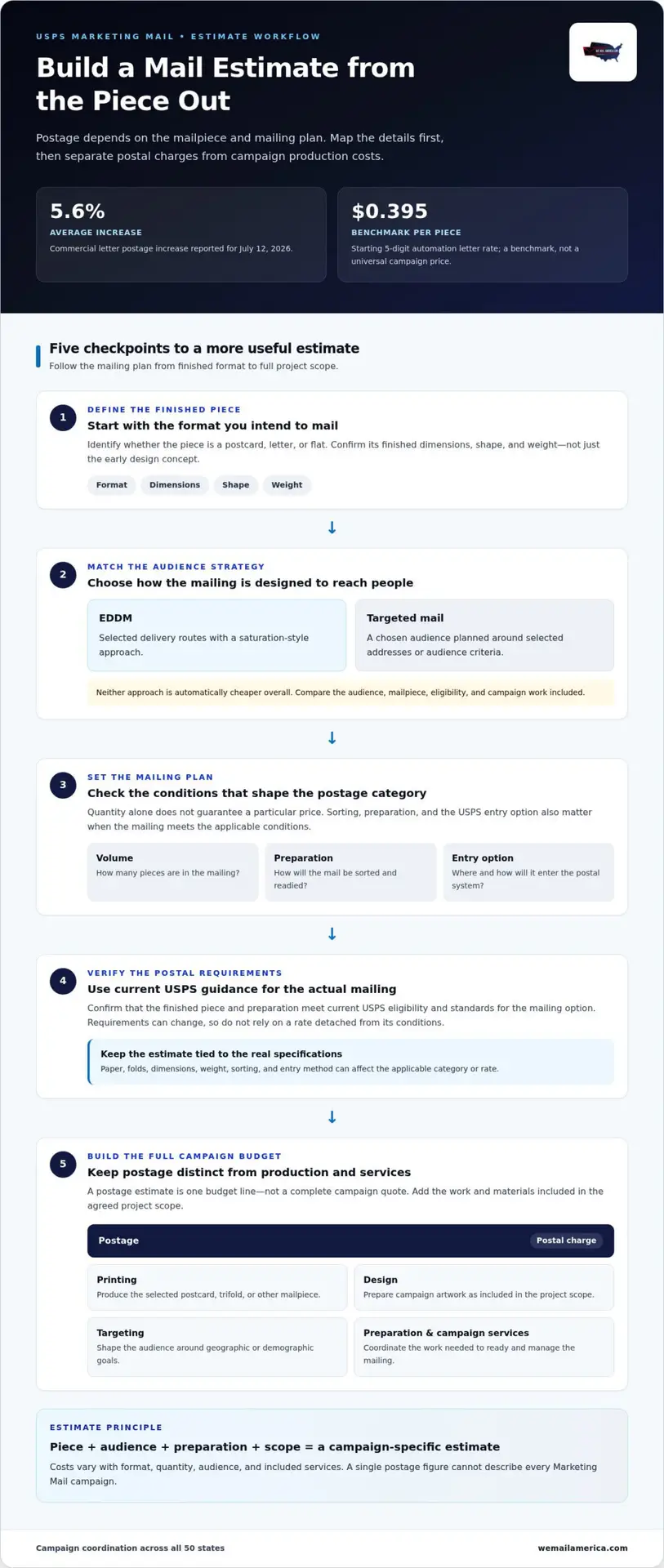
Start with the mailing plan, not a rate copied from an old quote. Work through these inputs, then check current USPS pricing against the specifications you intend to mail.
- Define the audience. Decide whether you’re planning route-based EDDM or targeted mail, then clarify the audience and campaign goal.
- Choose a format. Select the mailpiece type and intended design. The format helps determine which postal category and specifications to review.
- Set the quantity. Estimate how many pieces are needed to reach the intended audience. Quantity informs the plan but doesn’t guarantee a particular rate.
- Confirm specifications. Record the finished piece’s dimensions, shape, weight, and preparation method. Check current USPS eligibility and mailing requirements for the option you’re considering.
- Verify postage. Use current USPS rate tools or official tables, such as the USPS Business Mail Prices page. Date-stamp rate figures in your working estimate so you can revisit them if prices change.
These steps make the estimate specific to your campaign. A postcard and a folded mailpiece may receive different postal treatment, and the mailing method can change which requirements apply. Final eligibility and postage depend on verified mailing specifications.
Build a campaign estimate without guessing at postage
Keep the postage calculation separate from the project budget. As a planning example, estimate postage by applying the current verified rate for the selected mailing option to the quantity that qualifies under that option. Then add the campaign’s other scoped expenses. This is a framework, not a rate quote: a reliable final total depends on the piece, preparation, quantity, and mailing method.
Use a worksheet to keep each cost category visible:
- Postage: Current rate and planned mailing quantity.
- Printing: Production of the selected mailpiece.
- Design: Campaign artwork within the agreed project scope.
- Targeting: Audience planning for the selected mailing approach.
- Optional digital components: Mobile ads, texting, email, or connected TV when they support the campaign.
Separating the categories makes it easier to compare approaches without confusing postage with full campaign spend. We Mail America coordinates direct mail campaigns nationwide across all 50 states, with project estimates tailored to campaign scope. For a tailored direct mail campaign estimate, share your audience, format, quantity, and goals.
Plan a Nationwide USPS Marketing Mail Campaign with Confidence
A dependable campaign budget follows a clear sequence: define the audience, choose the mailpiece, confirm its specifications, verify current postage, and account for the complete project scope. This connects the postal charge to the actual mailing instead of treating a rate as the whole budget.
What to prepare before planning a campaign
Start with a short campaign brief. Gather the details that shape the audience plan and estimate:
- Objective and audience: State what the campaign should accomplish and whom it should reach.
- Geographic coverage: Identify the areas or delivery routes relevant to your audience, including coverage across multiple parts of the country if needed.
- Mailpiece format and quantity: Choose a postcard, trifold, or other format and estimate the quantity you intend to mail.
- Physical specifications: Provide the finished piece’s dimensions and weight when available.
- Mailing approach: Decide whether route-based EDDM, targeted mail, or a combination best fits the audience strategy.
These inputs help clarify the next decisions. A broad route-based plan and an address-targeted campaign may have different preparation needs, so establish your approach before comparing estimates.
Turn rate research into a coordinated campaign plan
Use final mailpiece and mailing details to verify current USPS Marketing Mail eligibility and postage. Rate tables can guide planning, but a figure only applies when the mailing meets the relevant conditions. Since usps marketing mail rates can change, keep the source and date with any rate used in your working budget.
Then combine the postal charge with production and audience planning. A full project scope may include consultation, geographic or demographic targeting, custom design, printing, preparation, and postage. We Mail America coordinates these campaign components for customers nationwide across all 50 states, helping businesses plan the full scope of their mailings.
Digital advertising can complement physical mail when it supports the campaign objective. Mobile ads, texting, email, or connected TV may extend a coordinated plan, but include them when they fit the audience and goals. The mailpiece provides a tangible message, while digital channels can add another way to engage.
Share your objective, audience, preferred format, and coverage goals to move from rate research to a tailored project discussion. Start a direct mail campaign inquiry.
Turn Your Mailing Plan Into a Confident Budget
Strong campaign budgeting starts with the audience and mailpiece, then checks the specifications and current usps marketing mail rates. EDDM and targeted mail serve different audience strategies, so compare their full scope, not just postage. Printing, targeting, preparation, and campaign services all belong in the project estimate.
We Mail America brings consultation, targeting, design, printing, and postage together for campaigns across all 50 states. When they support your goals, direct mail can also work alongside mobile ads, texting, email, or connected TV. The plan is built around your audience, format, and objectives.
Ready to put the pieces together? Request a tailored direct mail campaign estimate and share your campaign goals. With a clear scope and current postage information, you can move forward with greater confidence and put a tangible message in front of the audience you want to reach.
Frequently Asked Questions
How much are USPS Marketing Mail rates in 2026?
USPS Marketing Mail rates in 2026 depend on current postal prices and the details of the mailing. Format, weight, preparation, quantity, and mailing approach can all affect the applicable postage. Check current official USPS rate information against the final mailpiece specifications, and note the date of any figures in your estimate. Budget separately for printing, design, targeting, and campaign services, since postage alone isn’t the full project cost.
What factors affect USPS Marketing Mail postage?
Postage can depend on the mailpiece format, weight, dimensions, mailing volume, preparation, and eligibility for the selected USPS option. The combination matters, so the campaign name alone isn’t enough for a reliable estimate. Confirm the finished piece’s specifications and current USPS requirements before using a rate in your budget. Keep postage distinct from other project components, including design, printing, targeting, and campaign management.
Is USPS Marketing Mail the same as First-Class Mail?
No. USPS Marketing Mail and First-Class Mail are different postal classes with distinct purposes and requirements. The appropriate option depends on the mailing objective, contents, timing needs, and eligibility rules. Don’t choose based only on a remembered rate or an old comparison. Review current USPS guidance for both classes and confirm that the planned mailpiece qualifies for its intended class before comparing postage or building the campaign budget.
Can small businesses use USPS Marketing Mail?
A small business may use USPS Marketing Mail for an eligible advertising campaign, provided the mailing meets current requirements. Start by defining the audience and campaign objective, then choose a suitable format and mailing approach. Compare the full project scope, not just postage. Confirm the mailpiece’s specifications and applicable preparation rules before settling on a budget, since the campaign plan and eligibility determine which postal option fits.
How do EDDM rates compare with targeted mail rates?
EDDM and targeted mail use different audience-planning approaches, so compare them against the same campaign objective and scope. EDDM plans around selected delivery routes, while targeted mail focuses on a chosen audience. Route coverage, audience selection, format, quantity, and preparation can affect the estimate. Use current USPS requirements for the selected option, and don’t assume either approach will always cost less overall.
Does USPS Marketing Mail postage include printing and design?
No. USPS postage is the postal charge for mailing eligible pieces. Printing and design are separate campaign components, even when a broader project estimate groups them together. A clear budget distinguishes postage, production, targeting, and any campaign-management or digital services. We Mail America coordinates full-service direct mail campaigns, with project scope tailored to the work involved, so the estimate reflects the planned campaign rather than postage alone.
Where can I find current USPS Marketing Mail rates?
Use current official USPS pricing information and confirm that the rate applies to your mailpiece and mailing approach. Rates and requirements can change, so check the effective date rather than relying on an older article or estimate. Pair current postage information with the final piece’s specifications and mailing details. Then budget separately for printing, design, targeting, and other campaign services to understand the complete project scope.