
A clear service reminder can turn a routine maintenance need into a scheduled dealership visit. Car maintenance reminder postcards work best when each one focuses on a specific next step, such as booking an appointment, arranging an oil change, scheduling an inspection, or preparing for seasonal service. Keep the message easy to understand and the booking instructions easy to find.
Dealership customers have plenty competing for their attention, so make the reason to act clear right away. Tailor the headline, service details, timing, and response method to the appointment you want customers to book. This guide covers what to include, how to adapt messages for different services, and how postcard format and campaign planning can support a dealership mailing.
Key Takeaways
- Match each postcard’s message to a clear dealership goal, such as booking service or promoting seasonal maintenance.
- Make the design easy to scan, with a focused headline, relevant service details, and a clear way to schedule.
- Tailor oil-change and inspection notices so customers can quickly understand the service being recommended and what to do next.
- Choose a postcard format that gives your message enough room without crowding the essential details.
- Organize the key appointment and dealership information before preparing a mailing to make each reminder more useful.
Postcard purpose and dealership service appointments
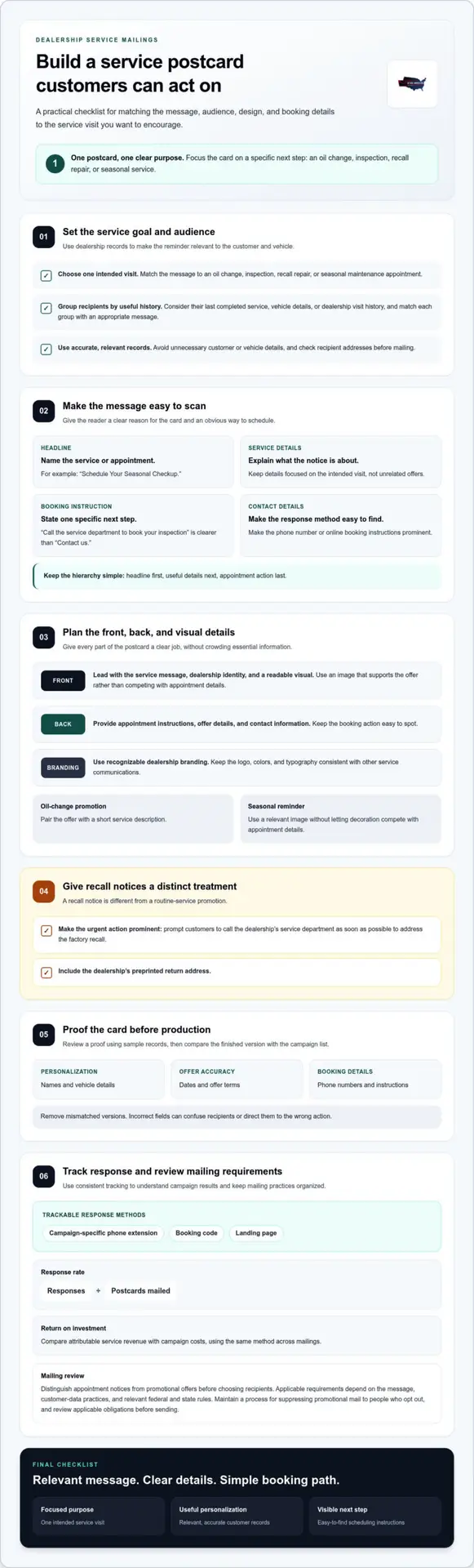
A dealership postcard can prompt customers to book a specific service appointment. Match its message to the visit you want to encourage, such as an oil change, inspection, or recall repair.
Reminders for Current Customers
Use service records to make each reminder relevant to the customer’s vehicle and previous visits. For example, invite returning customers to book an oil change or contact the service department about an upcoming inspection. Include a clear action, such as calling the dealership, so customers know what to do.
Special offers can encourage customers to schedule routine service. An auto repair loyalty program, for example, may reward repeat visits with a free or discounted service after a set number of loyalty-card punches. State the terms clearly, name the eligible service, and make the booking step easy to spot. Avoid crowding the card with competing offers.
Make the call to action specific: “Call the service department to book your inspection” is clearer than “Contact us.” A recall notice serves a different purpose from a routine-service promotion. Urgent recall postcards should prompt customers to call the dealership’s service department as soon as possible to address the factory recall, and include the dealership’s preprinted return address.
Postcards provide a physical reminder customers can keep, while email and text arrive digitally and phone calls allow direct conversation. Give each channel a distinct task, such as using a postcard for a planned seasonal-service reminder and a phone call for appointment coordination.
For U.S. mailings, distinguish appointment notices from promotional offers before choosing recipients. Applicable requirements depend on the message, customer-data practices, and relevant federal and state rules. Maintain a process for suppressing promotional mail to people who opt out, and review the campaign for applicable obligations before sending.
Response Rates and ROI
Measure results by linking each mailing to a trackable action. Use a campaign-specific phone extension, booking code, or landing page, then record appointments and completed services tied to that identifier. Calculate response rate by dividing responses by postcards mailed. Assess return on investment by comparing attributable service revenue with campaign costs, using the same method across mailings.
Common mistakes include using an outdated address, combining a service notice with an unclear promotion, or including more customer or vehicle details than necessary. Use current dealership records, limit postcard content to relevant service information, and review recipient lists before mailing. For a recall notice, make the urgent action prominent and direct customers to the dealership’s service department.
Automotive postcard design and customization
Custom automotive postcards are typically ordered from a direct-mail provider that can print and mail the campaign. Share the service goal, audience, approved artwork, message, and response method so the card prompts a clear dealership action.
Customer service records can guide relevant personalization. Group recipients by their last completed service, vehicle details, or dealership visit history, then match each group with an appropriate message. For example, customers who previously booked routine maintenance might receive a general reminder, while those with an upcoming inspection appointment could receive an inspection-focused notice. Use accurate records and avoid details that don’t help customers act.
Build the design around one central message. A headline such as “Schedule Your Seasonal Checkup” tells readers why the card arrived. Follow it with a brief explanation, the dealership’s name, and one clear action. If customers should call, make the phone number easy to find. If they should book online, feature those instructions prominently rather than burying them in small print.
Use dealership branding to make the sender recognizable. Keep the logo, colors, and typography consistent with other service communications, and choose a vehicle or service-bay image that supports the offer. Organizations looking to reinforce their identity across custom print and marketing collateral can turn to brandnewpromotions.com for comprehensive branding solutions. For an oil-change promotion, pair the offer with a short service description. For a seasonal message, use a relevant image without letting decoration compete with appointment details.
Personalization should improve relevance, not add clutter. A customer’s name can make a greeting feel direct, while the service message can reflect a previous visit or appointment type. Review a proof using sample records before production. Check names, vehicle details, dates, offer terms, phone numbers, and booking instructions. An incorrect field can confuse the recipient or direct them to the wrong action.
- Front: Lead with the service message, dealership identity, and a readable visual.
- Back: Provide the appointment instructions, offer details, and contact information.
- Recipient list: Separate customer groups by relevant service history before customizing copy.
Keep the copy focused on the intended visit. A postcard promoting an inspection shouldn’t make customers sort through unrelated sales messages. Use a clear hierarchy: headline first, useful details next, appointment action last. Before mailing, compare the final proof with the campaign list and remove mismatched versions.
For help planning a tailored print-and-mail campaign, share the postcard’s goal and audience through the advertising inquiry form.
Oil-change and inspection notices
Oil-change and inspection postcards work best when each names one service and one next step. Use dealership records to select the right audience, then align the message with the vehicle’s maintenance schedule and the purpose of the visit.
Make Oil-Change Notices Relevant
Start with the last oil-change record and the next service timing in the vehicle’s maintenance information. Avoid blanket messages that imply every car needs service on the same schedule. Models and owner guidance differ, so use dealership records to identify customers who may be due. If a record is incomplete, invite the customer to discuss routine maintenance instead of claiming a specific service is overdue.
Give customers a practical reason to book. A notice might say, “Plan your next oil change with our service team,” followed by the dealership’s phone number or booking instructions. If an offer applies, state which service it covers and explain any limits in readable language. Keep the offer secondary to the action, so readers can quickly understand both the service and how to schedule it.
Separate Inspection Messages
An inspection notice should identify the type of inspection and explain how to book. For example, a dealership can invite customers to schedule a vehicle check before a planned trip or seasonal change. Avoid implying that an inspection is legally required unless the message addresses a specific applicable requirement. Keep maintenance recommendations distinct from regulatory notices.
Create different postcard versions when customers have different service needs. A customer with a recent oil-change record may receive a reminder about routine maintenance. Another customer may get an inspection invitation based on dealership service history. Segmentation keeps each message useful instead of combining unrelated services in a crowded offer.
Before mailing, follow a simple review process:
- Match each recipient group to the relevant service record.
- Check the vehicle and customer details used for personalization.
- Confirm the message describes an invitation, offer, or urgent notice accurately.
- Make the call, booking instruction, and dealership identity easy to find.
Track each campaign separately with a distinct booking code or phone extension. When customers schedule, record whether they requested an oil change, an inspection, or another service, then compare responses with the postcard version sent. This makes it easier to refine the audience, wording, and offer for the next mailing.
When a customer’s service history is uncertain, use neutral language: “Contact our service department to discuss your maintenance schedule.” This avoids unsupported claims about what the vehicle needs while giving the recipient a clear way to get help from the dealership.
Postcard size and paper
USPS mailing requirements depend on a postcard’s dimensions, thickness, weight, address placement, and mail class. Plan the format and postage together, then make sure the finished piece meets the applicable USPS standards before printing.
Choose a size based on the message’s purpose. A short oil-change reminder may need room for a headline, dealership identity, and booking details. A seasonal service card with an offer may need more space for terms and supporting information. Write the essential copy first, then choose a format that keeps it readable.
Paper affects how a postcard looks and feels in a customer’s hands. Urgent recall postcards often use bright yellow, heavy-weight paper to distinguish the notice. For routine service reminders, consider how the paper color supports dealership branding and whether the text will be easy to read against it.
Keep the address area clear on both sides of the design. Leave enough space for the recipient address, return address, and postage indicia as required for the selected mailing format. On the message side, keep important appointment details clear of areas where address or postal markings could obscure them.
Use the front to establish the service message and dealership identity. The reverse can carry appointment details, contact information, and offer terms. For example, a card promoting a seasonal inspection could use a brief headline on the front, with the service explanation and booking information together on the back.
Before approving a proof, review these format details:
- Dimensions: Confirm the finished piece matches its intended mail category.
- Paper: Check that the chosen stock supports legible text and clear images.
- Addressing: Reserve the required space for postal and return-address information.
- Postage: Confirm the planned mail class and final piece specifications work together.
Postage depends on the mail category and the finished piece’s specifications. A larger or heavier format can affect mailing costs, so settle the dimensions before estimating postage or producing the full run.
Request a physical proof when paper choice or color matters to the campaign. Compare a yellow recall-style example with a branded routine-service card, then check readability, contrast, and address placement. This final review can catch layout problems before the dealership mails its reminders.
Check the finished dimensions, thickness, weight, address placement, and mail class against the standards for the intended mail category. Larger or heavier pieces can affect postage. Keep the recipient and return addresses and postage indicia in their designated area, away from important message content.
What information should a car maintenance reminder postcard include?
A useful reminder gives the recipient a clear reason to act and a simple next step. Include the dealership identity, the service being promoted, relevant appointment details, and a response method. For car maintenance reminder postcards, keep every element tied to one purpose, whether routine maintenance, an inspection, or a seasonal visit.
Lead with a headline that names the service or benefit. “Schedule Your Next Oil Change” is more informative than “Don’t Miss Out.” Add a short supporting line explaining the reminder, such as an invitation to contact the dealership about routine maintenance. Avoid claiming that a specific vehicle needs service unless dealership records support it.
Make the dealership easy to identify. Include its recognizable name, service department contact information, and the location details customers need to plan a visit. If customers can book online, provide accurate instructions. Keep the phone number or booking action prominent, not tucked into decorative copy.
Personalized details should help recipients understand why the postcard arrived. Use a customer’s name or relevant service history only when the records are accurate and appropriate for the mailing. A reminder can refer to a previous visit or a service category without exposing unnecessary vehicle or personal information.
- Service: Name the oil change, inspection, or seasonal maintenance being promoted.
- Reason: Explain the reminder or offer in one concise supporting line.
- Action: Tell recipients how to book, such as calling the service department.
- Offer terms: State eligible services, conditions, and any expiration details clearly.
- Sender: Show the dealership name and useful contact details prominently.
For a special offer, make its value and limits easy to understand. If it applies only to a particular service, say so beside the offer. Keep conditions readable and close to the main claim. Customers shouldn’t have to search the postcard to learn which appointment qualifies.
Review the proof from a customer’s perspective before printing. Check spelling, phone numbers, booking instructions, offer terms, recipient personalization, and address placement. Confirm that the headline, service details, and call to action agree. A postcard that promotes an inspection but gives oil-change booking instructions creates avoidable confusion.
Build a reminder postcard around the information customers need to decide and schedule. Plan a custom postcard mailing with a focused service message and clear appointment details.
We Mail America: Impact Post Card – 6 X 11
Impact Post Card – 6 X 11 from We Mail America gives dealerships a defined format for service reminders. Use it to feature one appointment goal, such as booking an oil change, inspection, or seasonal service, alongside clear dealership contact details.
Choose a larger format when the campaign needs more room for service information or offer terms. Options include the Extra Large Card – 9 X 11, Mailbox Buster Post Card – 12 X 9, and The Giant Post Card – 10 X 14. Match the format to the amount of copy and the prominence you want for the call to action.
Bring your reminder message and campaign needs to We Mail America to discuss a suitable postcard format. Contact We Mail America or visit wemailamerica.com.
Put Your Next Service Mailing in Motion
Give your next campaign a clear starting point: choose the dealership service goal, define the customer group, and decide how you’ll track appointments. This plan helps your team connect each mailing with a useful business outcome and refine future outreach based on actual responses.
Car maintenance reminder postcards can become a regular part of dealership communications when each campaign has a defined purpose. Start with one service message, coordinate the mailing with your service team, and make sure staff know how customers should respond. Use what you learn to shape the next campaign.
We Mail America offers postcard formats for dealership mailings. Share your campaign needs with the team to discuss a suitable next step.
Contact We Mail America about postcards and take the first step toward your next mailing.
Frequently Asked Questions
What are typical car maintenance postcard sizes and printing options?
Common formats range from compact reminders to larger cards with room for service details. Available options include the Impact Post Card – 6 X 11, Extra Large Card – 9 X 11, Mailbox Buster Post Card – 12 X 9, and The Giant Post Card – 10 X 14.
How do auto repair shops design effective maintenance reminder postcards?
Tailor the message to the service and customer group receiving it. For example, a campaign for customers who recently visited for tire service can use a different headline from a general seasonal checkup mailing. Keep the dealership’s visual identity consistent across versions and make the service department easy to recognize. Before mailing, compare each version with its intended recipient group to catch mismatched copy.
What vehicle maintenance intervals should reminder postcards mention?
Use the interval that applies to each vehicle rather than applying one mileage or time schedule to everyone. Vehicle make, model, maintenance guidance, and service history can affect appropriate reminder timing. Use dealership records to identify the last completed service, then align the postcard with the vehicle’s maintenance schedule. If records don’t support a specific due date, invite the customer to review routine maintenance.
What marketing laws and opt-out requirements apply to mailed service reminders?
Applicable requirements depend on the message, customer-data practices, and relevant federal and state rules. Maintain a process for suppressing promotional mail to people who opt out, and review the campaign for applicable obligations before sending.